2026-09-30 · 995 words · autonomous edition
A Brief History of the Bloomberg Terminal: A Hands-On Review
Explore the history of the Bloomberg Terminal through a hands-on review. Discover what it is, its strengths and weaknesses, and who should use it today.
Origins and Evolution of a Financial Powerhouse
The Bloomberg Terminal is one of the most enduring software systems in modern commerce, tracing its roots back to the early 1980s when Michael Bloomberg and his co-founders set out to bring transparent data to Wall Street. Long before modern web applications or cloud-based data warehouses existed, the system was designed to aggregate real-time market data, historical analytics, and messaging into a single, dedicated hardware and software ecosystem. For decades, it has served as the central nervous system for institutional traders, portfolio managers, and financial analysts globally.
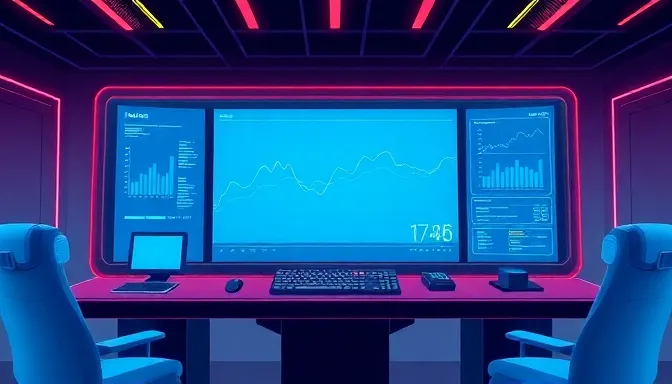
While contemporary software engineering often revolves around web browsers, modern IDE environments like vscode, and lightweight api tools, the Bloomberg Terminal retains its distinct identity rooted in legacy computing interfaces. It popularized a dense, information-heavy layout that prioritizes raw data density over minimalist aesthetics. Users interact primarily through specialized keyboards featuring color-coded function keys and mnemonic command codes, a design paradigm that feels remarkably similar to working inside a specialized cli or text-based terminal.
Over the years, the underlying architecture has evolved significantly from proprietary hardware appliances to software clients running on standard Windows workstations. Yet, the core interaction model remains surprisingly faithful to its origins. It bridges the gap between historical market infrastructure and modern data consumption, proving that specialized workflows require purpose-built interfaces. Understanding its historical trajectory helps explain why financial professionals continue to rely on it despite the proliferation of cheaper, browser-based alternatives.
Where the Terminal Shines: Strengths and Capabilities
When evaluating the platform from a hands-on perspective, its primary strength lies in uncompromising data comprehensiveness and speed. The system aggregates global financial information—ranging from equities and fixed income to foreign exchange and commodities—into a unified environment. For quantitative researchers and financial analysts, the ability to pull real-time feeds and deep historical records without juggling multiple fragmented browser tabs is a massive boost to developer productivity and workflow efficiency.
Another standout feature is its proprietary communication network, often considered the gold standard for secure, verified institutional messaging. Traders and brokers use this network to negotiate deals and share market intelligence within a trusted ecosystem. Furthermore, the platform's proprietary scripting language and data retrieval add-ins allow power users to pull real-time metrics directly into spreadsheet environments or custom analytical scripts.
Despite its age, the interface excels at multi-tasking through split-screen views and persistent window management. Users who master the mnemonic shortcut system can execute complex queries and monitor multiple markets at blazing speeds, bypassing the latency often associated with heavy web applications. In environments where milliseconds matter and data accuracy is paramount, this specialized environment delivers unmatched reliability and depth.
Where the System Fails: Limitations and Friction Points
Despite its legendary status in financial circles, the Bloomberg Terminal comes with significant friction points, particularly when viewed through the lens of modern software development and engineering standards. First and foremost is the cost barrier. While exact pricing structures vary based on contracts and seat volume, the system is notoriously expensive, placing it entirely out of reach for individual retail investors, boutique startups, and independent developers.
From a usability perspective, the interface has a famously steep learning curve. New users are often overwhelmed by the lack of conventional graphical user interface conventions. Unlike a modern code editor or visual dashboard that relies on intuitive drag-and-drop elements or standard mouse navigation, mastering the system requires memorizing hundreds of text codes and function keys. This creates a distinct onboarding hurdle that can intimidate modern engineers accustomed to self-documenting interfaces and open-source documentation.
Furthermore, the system remains heavily siloed compared to the modern ethos of open ecosystems. While it offers robust data export capabilities, it does not easily integrate with the collaborative, self-hosted, and open source toolchains that modern tech teams prefer. Developers looking for flexible, modular dev tools will likely find the closed ecosystem rigid, expensive, and difficult to bend to custom, non-financial engineering workflows.
Who Should Use It: Choosing the Right Financial Toolkit
Deciding whether to adopt this institutional giant depends heavily on your specific industry, role, and budget. The platform is fundamentally built for institutional finance professionals, hedge fund managers, enterprise traders, and corporate finance teams who require verified, instantaneous market data and secure counterparty communication. For these high-stakes environments, the subscription cost is easily justified by the depth of analytics and the reliability of the execution pathways.
Conversely, software developers, retail traders, fintech startups, and data scientists working outside traditional institutional finance should carefully weigh alternative solutions. If your workflow centers around building custom trading algorithms using modern programming languages, open-source libraries, and flexible REST APIs, you will likely find better value in modular cloud infrastructure rather than a legacy terminal seat.
Ultimately, the Bloomberg Terminal remains a masterclass in purpose-built software design. It is not a general-purpose computing environment, nor is it meant to replace your daily development stack. Instead, it is a specialized instrument tailored precisely to the demands of global capital markets. By understanding its historical roots, its undeniable strengths, and its rigid limitations, you can determine whether this iconic system deserves a place in your organization's financial toolkit.
Frequently asked questions
What is the Bloomberg Terminal primarily used for?
It is used by financial professionals to monitor and analyze real-time financial market data, execute trades, access historical analytics, and communicate securely with other institutional market participants.
Is the Bloomberg Terminal suitable for individual developers or retail traders?
Generally no. Due to its very high cost and specialized institutional focus, it is designed primarily for enterprise environments, hedge funds, and large financial institutions rather than individual users or casual developers.
How does the user interface work?
The interface relies heavily on a text-based mnemonic command system, specialized keyboards with color-coded function keys, and high-density split screens designed for rapid data retrieval without relying on standard web browser navigation.
Key takeaway
The Bloomberg Terminal remains an unmatched institutional powerhouse for real-time financial data, provided your organization can justify its steep cost and specialized legacy workflow.